
I’m writing this from my villa in California, the one I get every summer through the timeshare setup. Six solid weeks of proper sunshine, then another few weeks bouncing between friends and family across the States before I drag myself back to Hackney. I miss my mum’s Sunday roasts and the chaos of The Coven group chat, but I’d be lying if I said I don’t need this break. London grinds you down in ways that sneak up on you. Out here the air smells different, the light hits different, and I can walk around without feeling like I’m constantly bracing for some prick to clock my “I hate most men” energy from fifty paces. It keeps life fresh. I’ll see everyone soon enough. There’s a guy I like back home that I miss more than I expected, so we’ll see how these six weeks go, but I could be on my knees begging for a relationship when I get back, pure feminist hypocrisy I know, but you need what you need. I’ll probably feel different after six weeks though, so we’ll see. For now I’m letting the California version of me exist without the constant low-level tension of home.
AI Photos
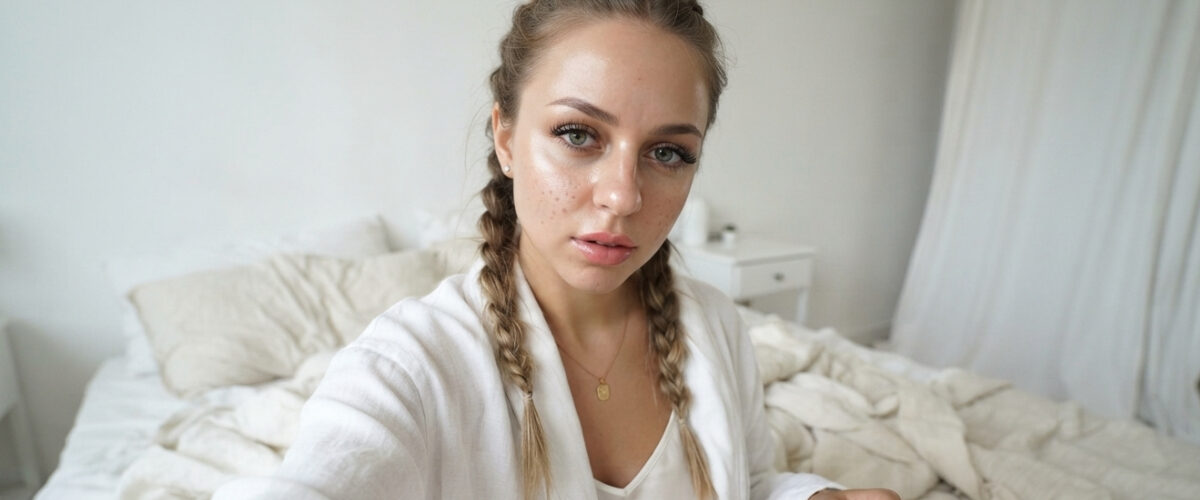
Let me be absolutely clear here. If you don’t like my AI photos, you don’t have to be here. They are a fun and great, and I didn’t invite you to my site. I did a two-hour livestream for my subscribers Saturday, you could have joined in and saw what I really look like, and it’s not far from reality, I’m just a little less perfect. I’ve started drip-feeding actual photos of myself with way less filtering. Some of you have already clocked it. The AI versions were still me, same face shape, mouth, same chaotic energy, but the heavy filters were doing the heavy lifting. And I stand by that choice.
A woman online who writes the kind of shit I write doesn’t get to be careless. Not when you spend half your time in Hackney with opinions that make certain types of men want to argue with you in the street. Safety isn’t negotiable. But apparently even that has started causing problems I won’t get into here. The person in question can care about optics all they like; some of us have actual lives and reputations to protect. Sometimes you just have to keep your most useful tools clean and functioning. I’m not doing it for people I don’t know, I’m doing it to keep a good thing sweet. So here we are. Real photos, fewer lies, and me not giving a single solitary fuck what anyone thinks about it. That part of me died years ago. The money and the success came after I stopped performing for strangers. Funny how that works.
Annoyingly, I bet if I dug into the people that don’t like it, I bet I’ll find some filters there. So yes, fuck off. Join a live stream. Sorted.
I’ll Never Be Vegan
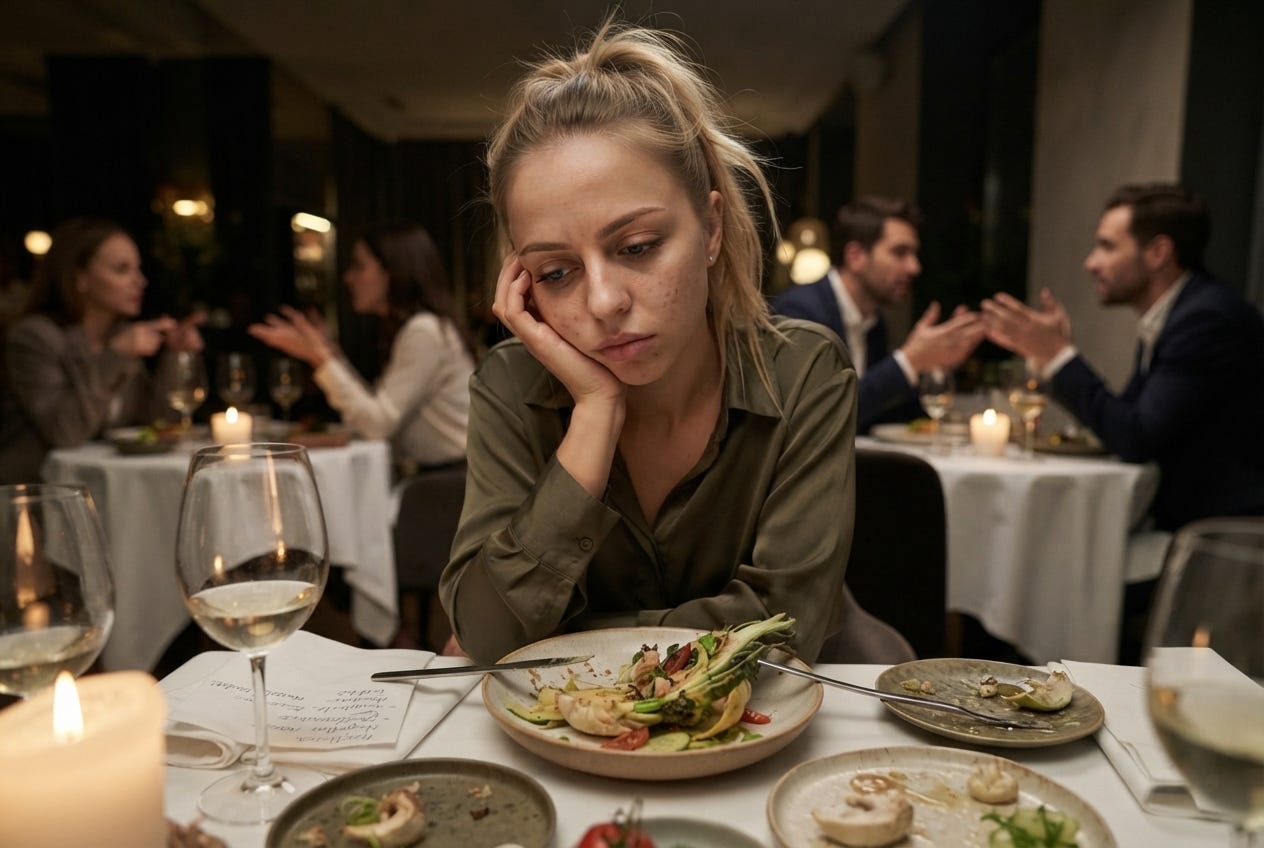
Anyway. I’ve been thinking a lot about this while I’m out here eating proper food without anyone side-eyeing my plate. I’m a loud, unapologetic leftist feminist. I believe in collective action, dismantling systems, bodily autonomy, and tearing down every structure that treats women like afterthoughts. I will argue until I’m blue in the face about the need to centre the most marginalised, about how class and race and gender all intersect in ways that make individual “choices” feel like a sick joke sometimes. And yet I will never, ever be vegan. Not even a little bit. Not for the animals, not for the planet, not for the aesthetic, and definitely not to make other leftists feel morally superior at brunch.
Let me be clear from the jump: this isn’t some lazy “bacon tho” defence. I’ve heard every version of that argument and they’re all boring. My refusal runs deeper than taste, though taste is obviously part of it because I’m not a fucking robot. It’s political. It’s about whose comfort gets centred and whose labour gets erased when we turn food into a purity test. Veganism, as it’s currently packaged and policed in leftist and feminist spaces, is often just another way for middle-class people to feel like they’re doing something revolutionary while the actual systems of exploitation keep humming along nicely. I’ve watched too many people in my circles weaponise it. They’ll post their oat milk lattes and impossible burgers like they’ve personally dismantled factory farming, then turn around and buy fast fashion made by women in Bangladesh who are paid pennies and work in conditions that would make most of these activists faint. The selective outrage is genuinely impressive. They’ll cry over a cow but stay silent on the fact that the phone they’re using to post about it was built with conflict minerals and child labour. It’s performance dressed up as ethics, and I’m allergic to that shit.
I grew up proper working class. Council estate in Basildon. Food wasn’t a moral choice; it was what was in the fridge or what was on offer at the supermarket. My mum worked her arse off and still made sure we ate. Sometimes that meant cheap chicken, sometimes it meant whatever was reduced at the end of the day. There was no ethical consumption under capitalism when you were choosing between heating the house and buying the “good” mince. The idea that everyone can just switch to expensive plant-based alternatives and call it activism ignores the reality that millions of people are already stretched thin. Veganism gets sold as accessible now, but walk into any supermarket and compare the price of a block of tofu or a pack of those fancy meat substitutes against basic chicken thighs or mince. For a lot of families, especially single parents or people on benefits, that difference matters. It adds up. And when you start shaming people for not making the “right” choice with money they don’t have, you’re not doing leftist politics. You’re doing middle-class gatekeeping with extra steps.
I’ve seen this play out in feminist spaces too. Women who’ll talk beautifully about bodily autonomy when it comes to abortion or sex work suddenly get very prescriptive about what other women should put in their bodies when it comes to food. The same people who’ll fight tooth and nail against anyone telling women what to do with their reproductive systems will turn around and act like refusing animal products is some universal moral imperative that overrides everything else. It’s inconsistent as fuck. My feminism includes the right to enjoy food without turning every meal into a political statement that requires constant justification. I’ve spent too many years unlearning the idea that women should shrink themselves — in body, in appetite, in desire — to fit someone else’s version of acceptable. That includes shrinking my plate to make other people comfortable with their own ethics. If I want a proper steak or a full English or whatever the hell I fancy, I’m having it. The same way I’ll have the sex I want and write the opinions I want. Bodily autonomy isn’t selective.
There’s also this weird class tourism that happens with veganism in activist circles. A lot of the loudest voices pushing it come from backgrounds where they had the luxury of experimenting with diets. They didn’t grow up watching their parents stretch one chicken between five people or rely on school meals. When they talk about “reducing harm,” they’re often talking from a position where harm was never as immediate or material for them. Meanwhile, in places like the global south, small-scale animal agriculture is often tied to survival, culture, and land rights in ways that Western vegan activists conveniently ignore. Telling communities that have raised livestock for generations that they need to stop because it makes someone in Brooklyn feel better is colonial as hell. It’s the same energy as rich countries lecturing poorer ones about emissions while having done the bulk of the historical polluting. Leftist politics should be about solidarity and material conditions, not imposing one narrow moral framework on everyone and calling it progress.
I’ve tried the vegan thing before, properly, because I’m not completely closed-minded. I lasted a few months. The food was fine in small doses but it started feeling like punishment after a while. Everything tasted like it was trying to be something it wasn’t. And the social side of it was exhausting. Every dinner out became a negotiation. Every family meal turned into a thing. I watched friends who’d gone fully vegan start policing each other’s choices like the food police. One slip-up and suddenly you’re the problem. The moral hierarchy that develops is grim. It stops being about reducing harm and starts being about who can perform the most purity. I’ve seen people get more upset about someone eating cheese than they do about actual exploitation happening in their own supply chains. The energy is completely misplaced.
What really sealed it for me was realising how much of the vegan movement relies on individual consumer choices as the primary form of activism. Buy this instead of that. Vote with your wallet. It’s the same neoliberal logic that tells us to recycle more while corporations pollute on an industrial scale. It lets the actual systems off the hook. Factory farming is horrific, no argument there. But the solution isn’t asking every working-class person to individually opt out of a food system designed to be cheap and accessible. The solution is collective action against the corporations and policies that make exploitation profitable in the first place. Regulating agriculture properly. Supporting better welfare standards. Investing in sustainable practices that don’t require everyone to become an ascetic. That’s actual leftist work. Pretending your oat milk is revolutionary while the rest of the system stays intact is just sophisticated cope.
I also find the whole “animals are friends not food” framing deeply unserious when it’s applied selectively. I’m not out here arguing for factory farming. I’m saying the line between which animals we’re allowed to care about and which we’re not is arbitrary and often cultural. Dogs in some countries, pigs in others. The same people who’ll lose their minds over a dog being eaten will happily eat a pig that lived in equally grim conditions. Or they’ll wear leather while lecturing others. The consistency is non-existent. And when you start ranking lives in a hierarchy of moral worth, you’re doing the exact kind of thinking that underpins a lot of the oppression feminists are supposed to be against. Why is a cow’s life more sacred than the life of a farm worker exposed to pesticides? Or the life of a woman in a garment factory? The selective empathy is convenient for people who want to feel morally clean without actually challenging power.
On a personal level, food is one of the few areas left where I refuse to perform for anyone. I’ve done enough performing. I faked orgasms for years because I thought that’s what good girlfriends did. I softened my opinions because I didn’t want to make men uncomfortable. I’ve spent too much of my life managing other people’s feelings at the expense of my own. That stops at the dinner table too. If I want to eat meat, I’m eating meat. If I want to enjoy it without a side of guilt or explanation, I’m doing that as well. My feminism isn’t about becoming smaller or more palatable. It’s about expanding what women are allowed to want and enjoy without apology. That includes food that brings genuine pleasure. I’ve had enough joyless eating in my life. I’m not adding more of it for someone else’s ideology.
There’s also the simple fact that a lot of vegan substitutes are ultra-processed nonsense pushed by the same corporations that run the meat industry. They’re not some pure alternative; they’re just another revenue stream. The environmental arguments get trotted out like gospel, but the data is messier than activists admit. Some studies show well-managed regenerative grazing can actually be better for soil and carbon than certain monocrop plant agriculture. Others show the opposite. The point is it’s not the black-and-white moral issue it’s sold as. When people act like the science is settled and anyone who questions it is a monster, it stops being about evidence and starts being about belief. I’ve got no time for that. I want politics rooted in material reality, not dogma.
Living here in California for these stretches of summer makes it even clearer. The food culture is different. Portions are bigger, flavours are bolder, and nobody’s apologising for enjoying a proper burger. I’ve had some of the best meals of my life out here without anyone turning it into a TED Talk about ethics. Back home the conversation around food in certain circles has become so loaded that it sucks the pleasure out of eating entirely. I refuse to live like that. I want meals that feel like celebration, not like a political test I’m constantly failing or passing. That doesn’t mean I don’t care about animals or the planet. It means I refuse to outsource my ethics to a diet that lets people feel superior while changing very little about the actual power structures.
I’ll keep fighting for better systems. I’ll keep arguing for stronger animal welfare laws, for better pay and conditions for agricultural workers, for food sovereignty in places where it’s been stripped away. I’ll keep centring the most vulnerable in those conversations. But I won’t pretend that my personal consumption habits are the revolutionary act. They’re not. They’re personal. And I’m allowed to make personal choices that bring me joy without them being turned into a referendum on my politics. I’m a leftist feminist who believes in pleasure without apology. That includes the pleasure of food that tastes like something I actually want to eat. The day that becomes incompatible with my principles is the day I’ll reassess. Until then, pass the steak. I’m not performing for anyone’s comfort, least of all the comfort of people who think their dietary restrictions make them better activists than the rest of us.
I’ll be here for the next few weeks, eating what I fancy, taking the occasional unfiltered photo, and letting the California air do its work. Then it’s back to the real world, back to the arguments, back to the writing that actually matters. But for now, this is enough. Food that doesn’t require a dissertation. Company that doesn’t require constant justification. And the quiet knowledge that my politics don’t need me to shrink my life to fit inside someone else’s moral framework. That’s the kind of leftist feminism I can live with.